The Long Conversation Between Mending and Quilts
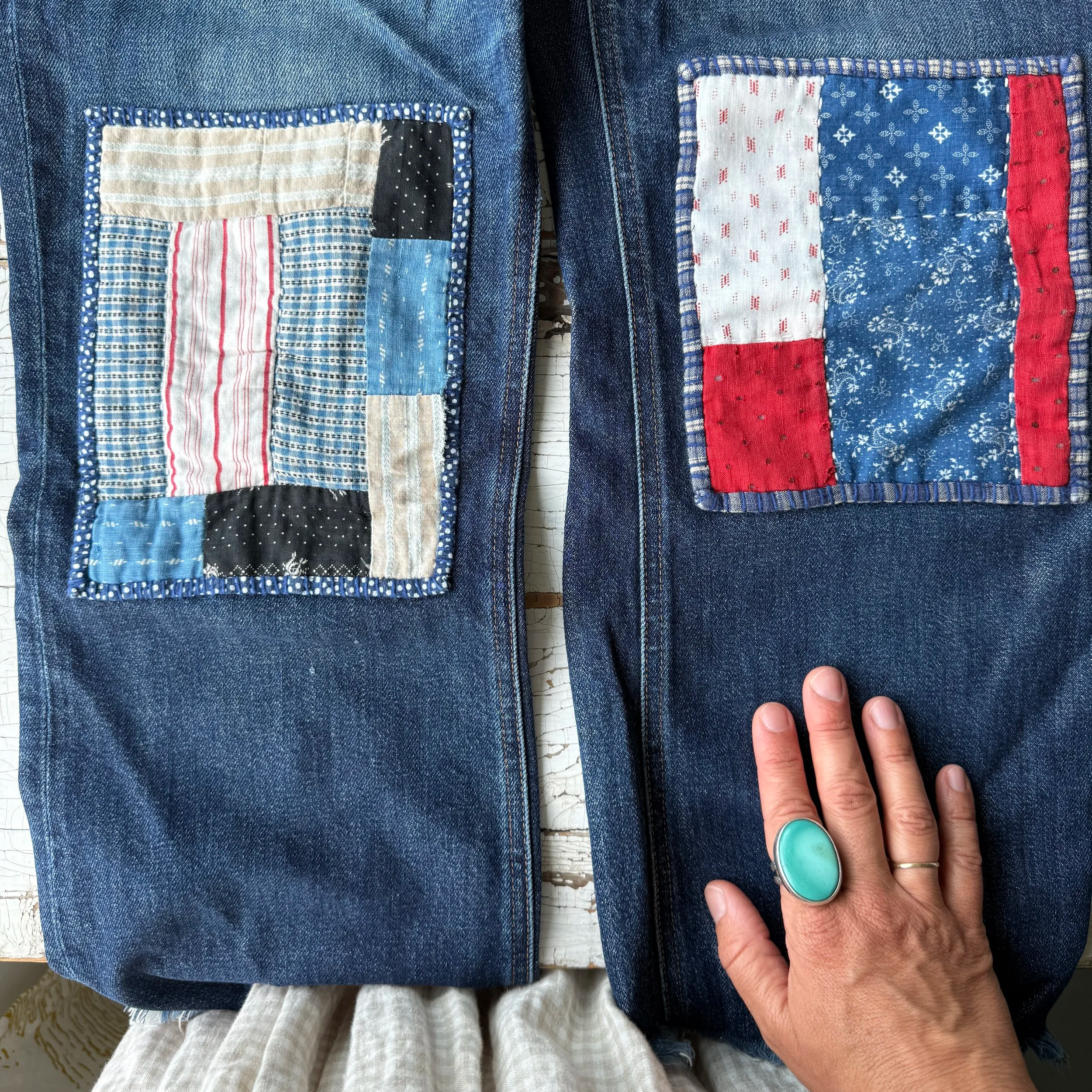
(Vintage quilt squares for mended jeans.)
I love the shared language between mending and quilts—the conversation of patchwork, hand-stitching, upcycling and reusing cloth. It feels like a vocabulary that’s been shared since the beginning of textiles. Can I use this patch to mend this quilt? Should I use this swatch to darn this sweater? Can I cut these old garments into squares for a new quilt top? Yes, yes, and yes. I’m fascinated with pre-industrial textile techniques. And as robots speed up our capacity to do almost everything (though, arguably, not always well) I find my fascination grows—particularly regarding repair techniques that don’t require machines. I love how hand-stitching uses so few tools, such very basic stitches, and requires sharing information. Sewing machines have their place—I still use mine for garments and household goods—but I’m most interested in handwork that adds value, durability, and beauty. I’m most interested in hand-stitching.
But the quilts—they feel like fundamental textiles. Essential cloths. Material time capsules of our humanity. Particularly the quilts made from fabric scraps or found materials. That relationship between resourcefulness and beauty—mending and quilting—delights me. It’s a very basic, necessary, universal material. The quilt. Or blanket. Or tapestry. We come into the world as naked, overstimulated newborn humans only to be quickly swaddled with soft cloth. We are kept warm, dry, cool, clean, and comforted by cloth. And yet our earliest ancestors realized, not just the opportunity for utility, but the chance at making beauty. Expression. Community. Maybe even communion. We do not just paint our walls to cover the walls—we paint to add beauty. We make a quilt for beauty too. And for all the utility it offers there is some aesthetic expression that’s essential to the very initial construction. We choose colors, textures, and shapes before we begin piecing or stitching.
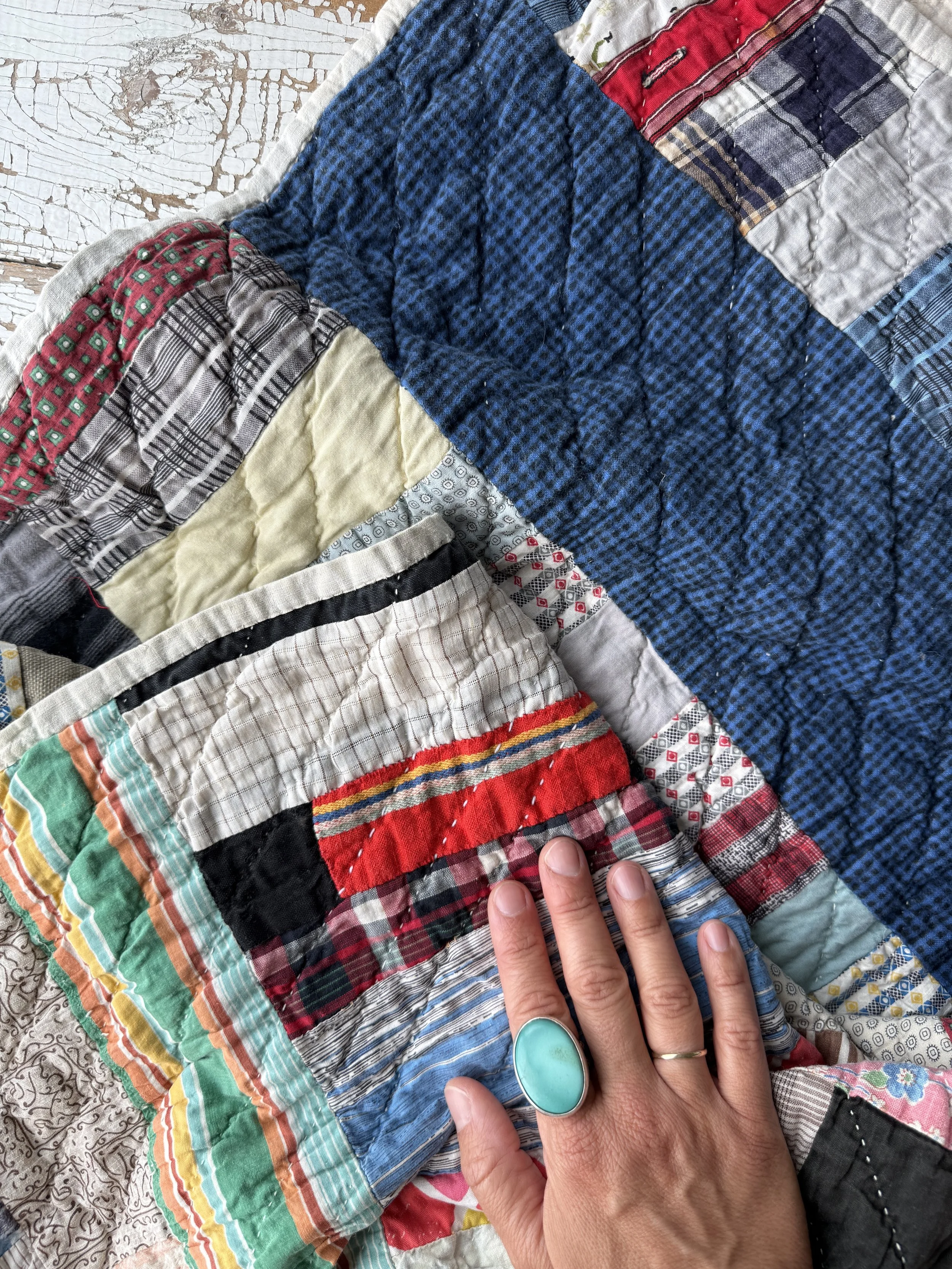
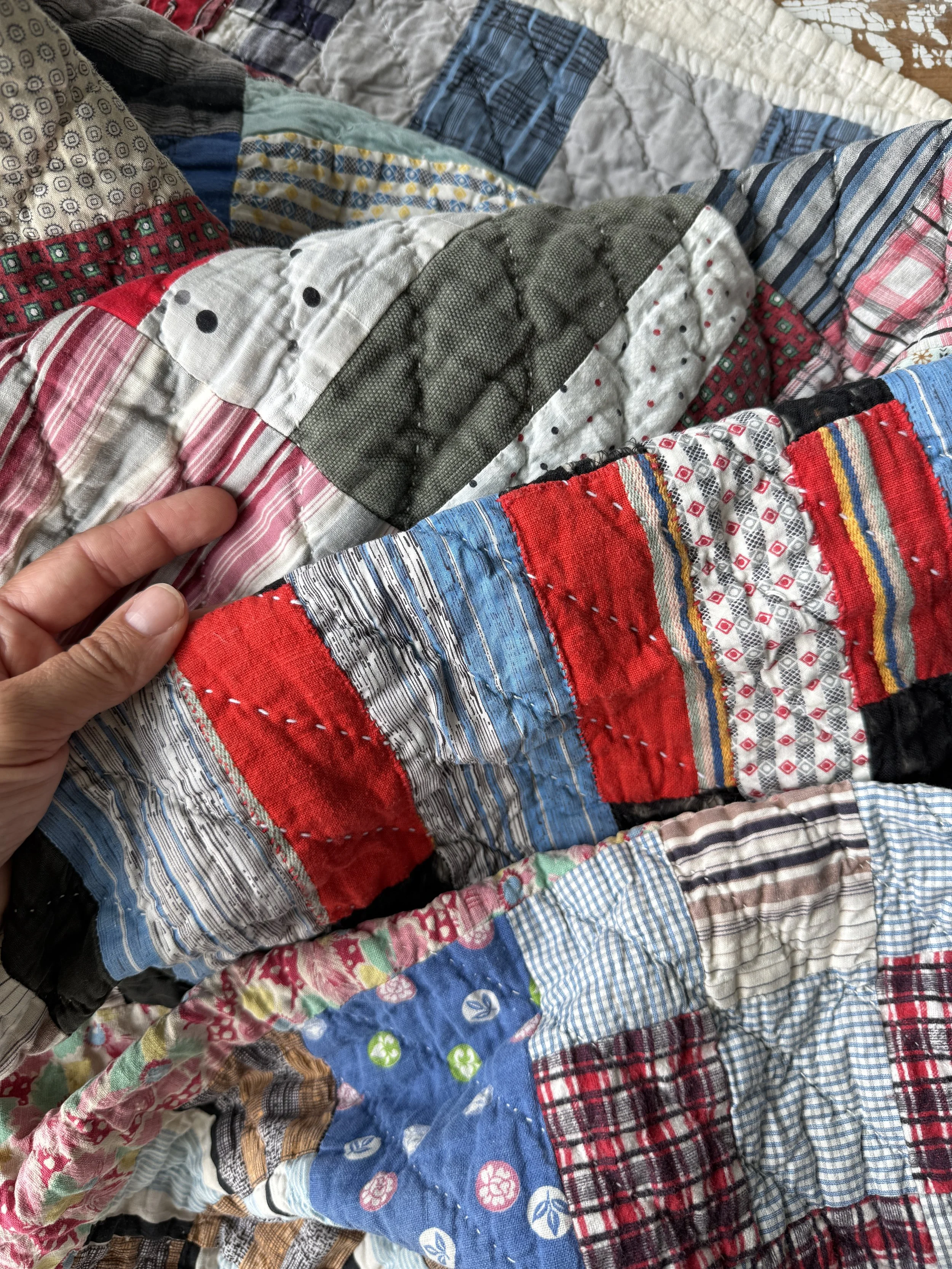
My great-grandmother was a quilter. I never met her but her quilt hangs proudly over the back of my living room chair. My children know that their great-great grandmother made that quilt. They know she existed. They know we are part of a specific lineage of specific humans. With specific histories. And handwork. My great-grandmother married into a family of farmers. And those farmers had lived in that part of the world for, at least, three generations when she wed. Which makes my niece and nephew the seventh generation to be born near that very particular place where she made quilts and her in-laws farmed the hills. There are still hollows named for them, collapsed barn roofs with their surname, and a small cemetery with several headstones in their remembrance. The exact town no longer exists on maps—it was removed years ago. But its removal doesn’t eradicate our lineage. Soon after my ancestors immigrated to America—they built their lives in that particular place. They farmed. And quilted. And made things by hand.
I don’t know everything about my early ancestors—and not nearly as much about my father’s side—but I do know where my stitches originate. I know they originate in a small town in the south-central part of Upstate NY—culturally similar to Ohio, Pennsylvania, and Western NY. The far eastern edge of the American Rust Belt. I know my mother’s family came from England and Germany before making their way to that small town Upstate. I know my father’s side was German and Finnish. I know my maternal great-grandmother made quilts, fed dandelion greens to her chickens, and earned money wallpapering homes. I know that after my grandmother died, my great-grandmother spent many afternoons and weekends with my mother. Where she passed down her love of textiles, handcraft, and rural life. And I know that through this tending, my mother learned to stitch too. Most of my early, informal training in textile arts was learned from my mom—at the side of her rocking chair by the wood stove in winter or at her old Singer sewing machine in the laundry room.
My mother gifted me several journals of my great-grandmother’s. The entries are sparse and pragmatic. I feel her stories more deeply in her stitches than her words. The way her black thread dances across the white cotton and the bright, boisterous feed sack cloths fill shapes and spaces across the fiber canvas. Her quilts are wondrous, story-filled, and yet ordinary creations. They hold our lineage. They tell our tales. They let her great-great grandchildren know that someone dreamed of them—in stitches and cloth. Quilts can be anything at all. Any size, shape, color, pattern, or expression. They can follow traditional, contemporary or improvised patterns. And they also create an opportunity for creative mending, when the time comes. I’ve made three quilts and a handful of patchwork objects. My quilts have always felt more like stepping stones in my process-based fiber arts practice than movement towards my identity as a quilter. Maybe someday I’ll feel differently. Or just want to leave a finished quilt for a great-grandchild I’ll never meet.
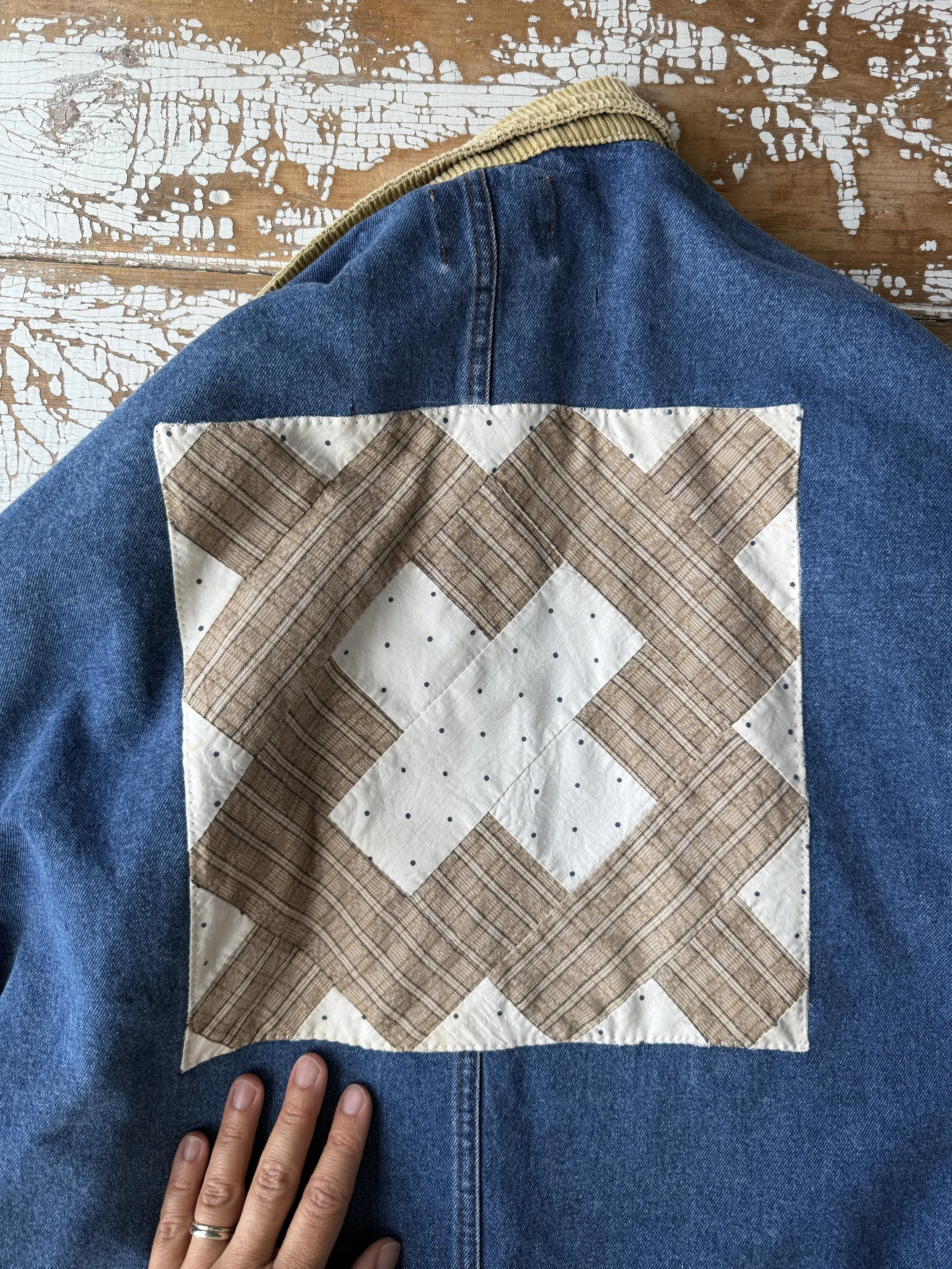
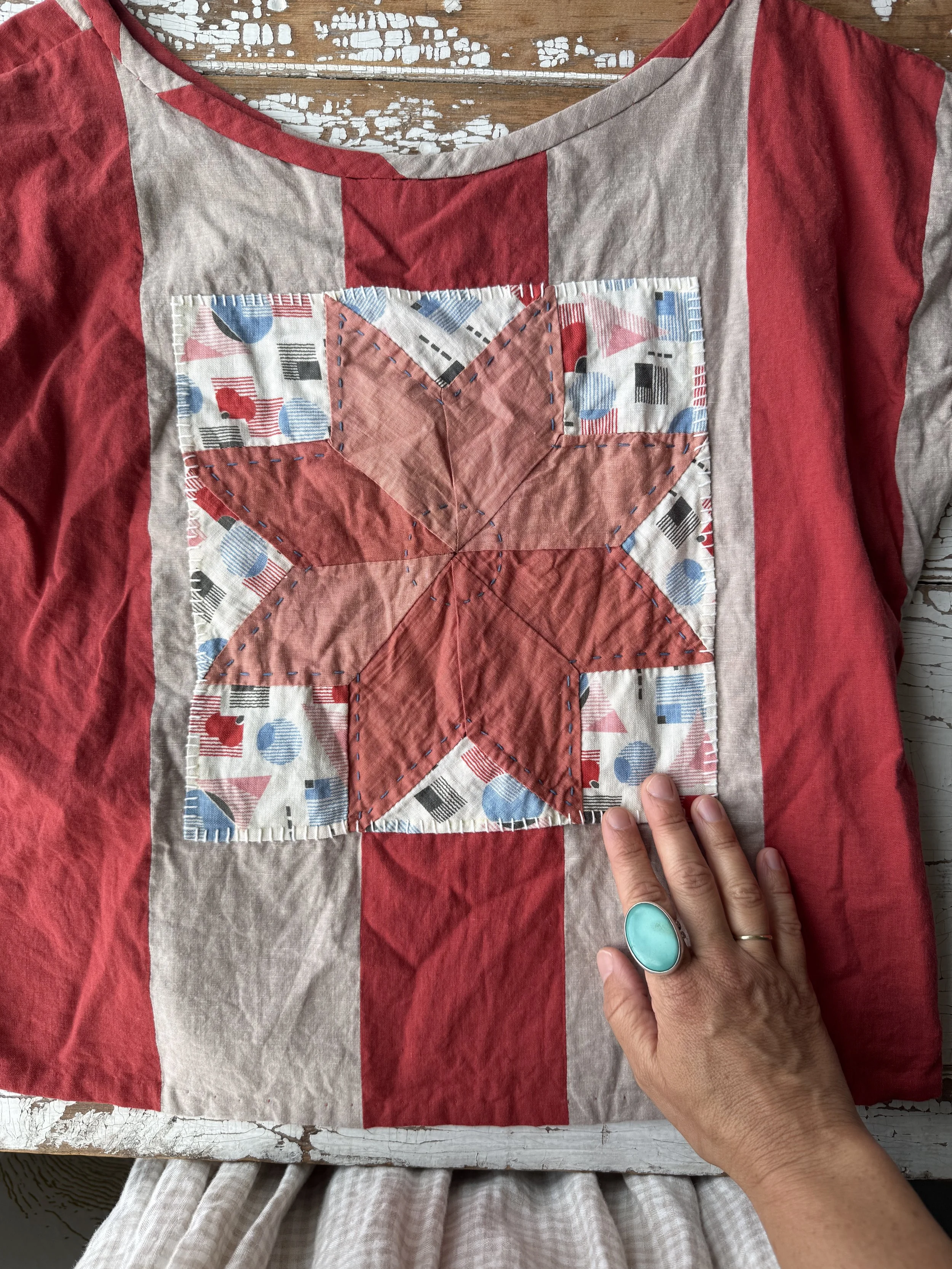
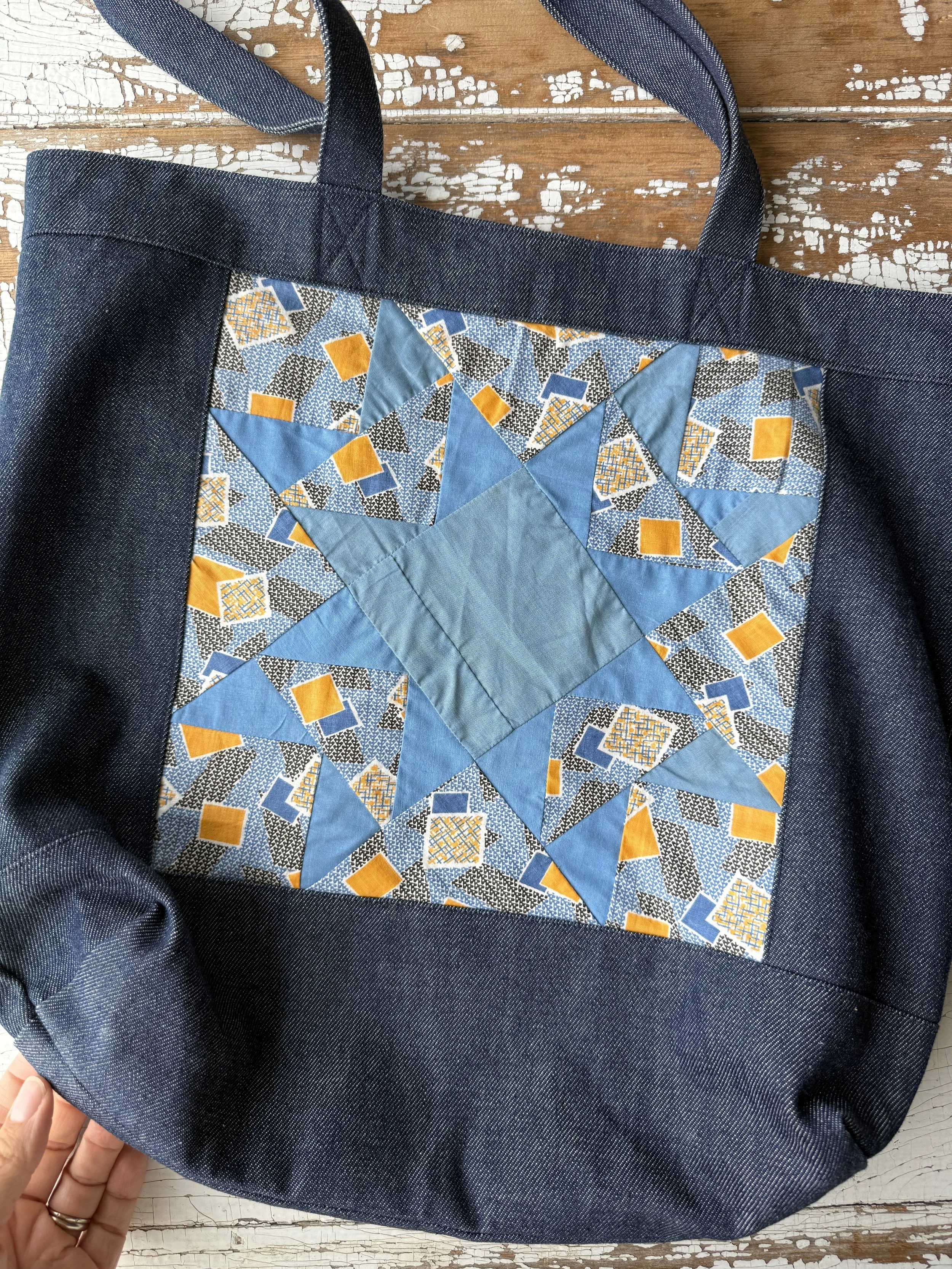
I feel a resonance and intimacy with quilts that’s similar to what I feel when mending. It’s as if my hands just needed the basic techniques to remember what to do. Like cooking. Or gardening. Somewhere in an unnamable space, deep inside my cellular structure, my body remembers how. I love recognizing that mending and quilting have been in dialogue for more years than my seven generations have lived in Upstate NY. And yet, somehow, both quilting and mending are contemporary and relevant today. Maybe that’s just the nature of patching and stitching and seeing the infinite potential in cloth scraps. Seeing beauty in the castoff or mundane. Seeing how I want to be in the world and what I want to leave behind—mending, patchwork, connecting creativity and resourcefulness to the ones who came before and, somehow, those who come after.
PS—I am teaching a new online class, Mending Quilts and Quilted Mending, on October 8 with Tatter in NYC. Class is online and will be recorded. I have patchwork mending kits in my shop and some very special jackets and tote bags designed around vintage quilt squares. Happy making, mending, and quilting to you.
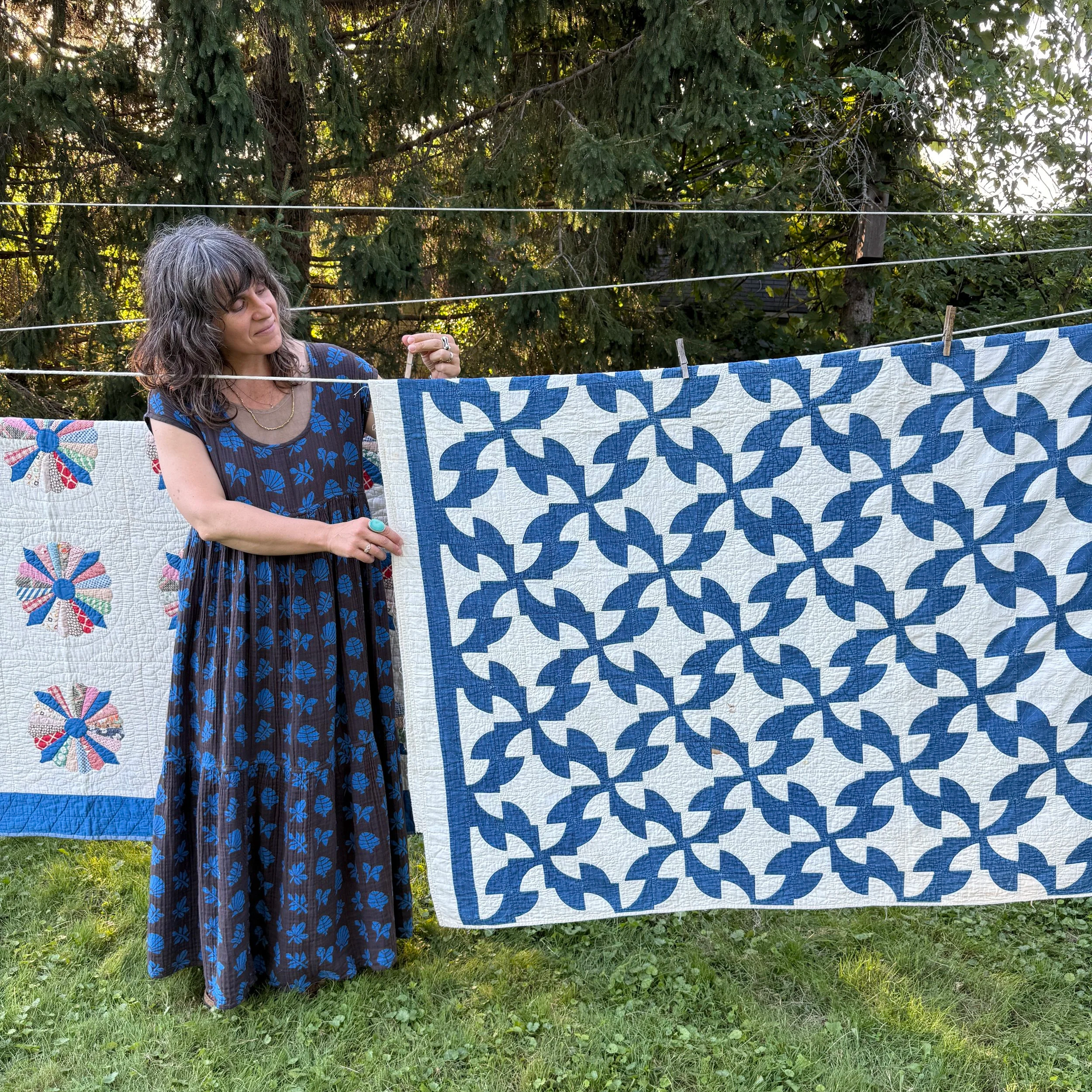
(Standing at the clothesline with vintage quilts.)